

From Theory to Practice
Collaboration sounds great in theory, but what does it actually look like? Keri breaks down the essential elements of authentic collaboration and shows you exactly how to move beyond the buzzword into real, meaningful interactions that work for PDAers.

Learn the Real Difference
Discover why traditional problem-solving falls short for PDAers and how disguised compliance sneaks in when we think we're collaborating. You'll gain clarity on what separates genuine partnership from well-intentioned mistakes.

Ways to Put Collaboration into Practice
Explore ways to navigate disagreements, communicate boundaries, and find solutions alongside PDAers as equal partners. Bring genuine collaboration into everyday interactions at home, at school, and in professional settings.
Meet Keri Schouten
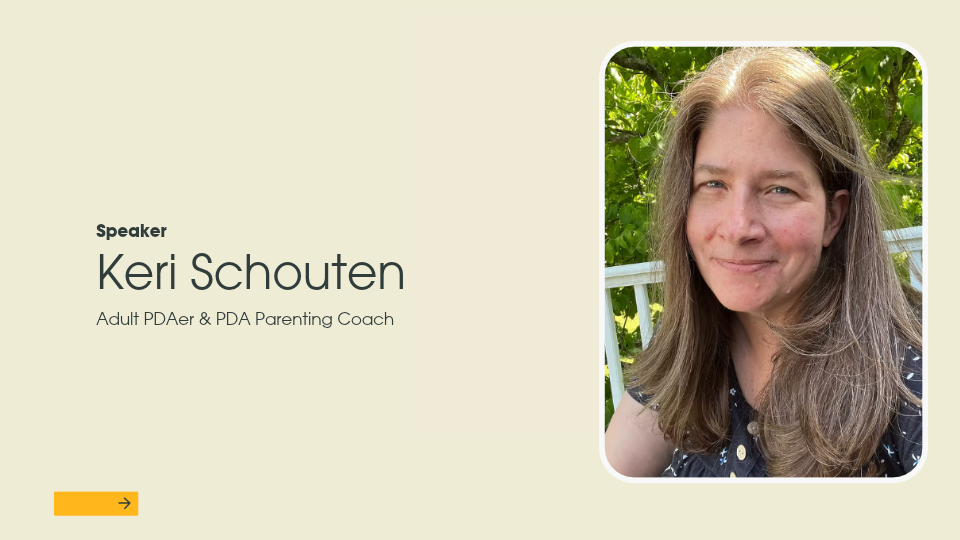
Keri Schouten, MA, is an AuDHD-PDAer with a 25-year passion for respectful, collaborative, and playful approaches to supporting young children. As an EEC certified lead teacher, she's worked directly with many young PDAers in therapeutic school settings, giving her deep insight into what actually works in practice. Today, she works in the Metrowest Boston area as a PDA-specific parent coach and respite provider for families with children ages 3-9. But what makes Keri's perspective truly unique? She's lived it. As an adult PDAer herself, she understands the internal experience of PDA—the need for autonomy, the resistance to perceived control, and the profound impact of genuine respect and collaboration. She combines this lived experience with years of coaching families and working directly with PDAers, giving her a rare ability to explain what collaboration actually looks like from the inside out. Her approach is grounded in respect, authenticity, and real-world practicality. She doesn't just tell you what to do—she shows you why it matters and how to make it work in your specific situation.
Ready to Master Authentic Collaboration?
This 3-hour session offers a clearer, more confident approach to communicating and collaborating with PDAers. Through everyday examples, explore ways to honor autonomy, build trust, and work through challenges together.
$65.00